
From Perception on Axia to Apreo: Increasing Stability Through Early SQA Involvement
For our long-term partner Thermo Fisher Scientific, we implemented a shift-left strategy in the Perception on Apreo project. By involving SQA early in the development process, we achieved higher system stability, faster delivery, and more efficient quality management for complex software used in electron microscopy.
Customer

Competences
About the Case Study _
Customer Benefits
- Reduced Time-to-Market: Faster delivery of new features by eliminating rework and late-stage adjustments.
- Improved Release Predictability: Clearly defined acceptance criteria minimize risks during the later stages of sprint execution.
- Lower Maintenance Costs: Issues are identified and resolved during requirements analysis rather than after implementation.
- Continuous Quality Assurance: Automated regression testing ensures system stability without increasing manual testing effort.
- Robust Integration: Reliable synchronization of data and commands between two critical applications, Perception and Apreo xT.
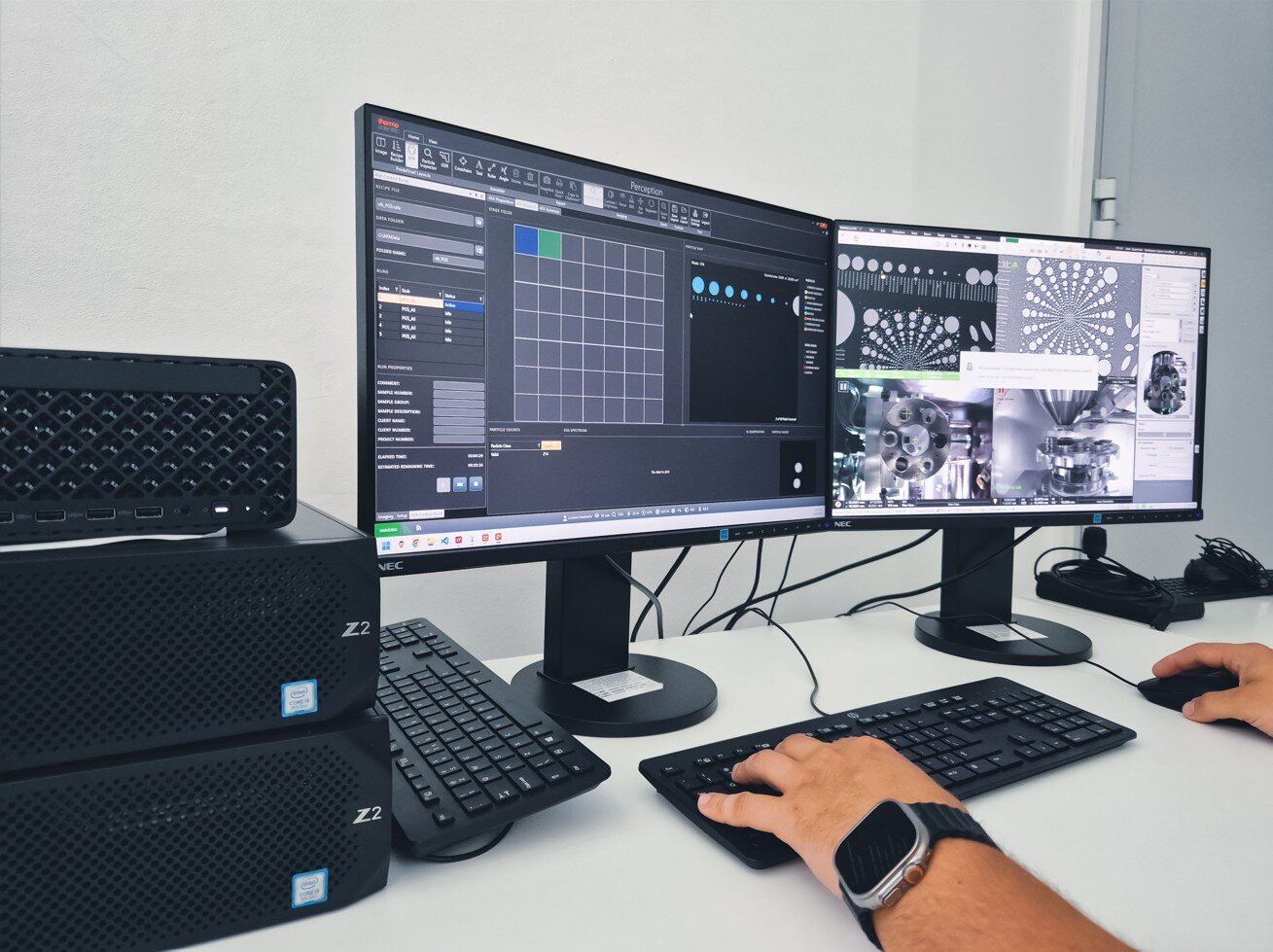
The Perception on Apreo (PPIBridge) project serves as a critical communication hub within the electron microscope control system. Acting as a bridge between the Perception and Apreo xT applications, it ensures seamless data synchronization and command exchange between the two systems. Due to the close interdependence of these applications, any change in one part of the system can directly affect the behavior of the other, placing high demands on both development quality and testing.
Lessons learned from the previous Perception on Axia project showed that a traditional testing approach, where quality assurance is addressed primarily at the end of the development cycle, often leads to unclear requirements and costly fixes shortly before release. To address these challenges, quality assurance specialists were involved from the very beginning, contributing to both requirements analysis and solution design.
The SQA Lead worked closely with the development team during requirements analysis, helping break down individual requirements into smaller, clearly defined tasks with explicit acceptance criteria. This gave developers a precise understanding of the expected outcomes and significantly reduced the need for rework later in the development process.
Another important part of the solution was the creation and maintenance of a testing environment that accurately reflected real-world electron microscope operation. This made it possible to validate changes under conditions closely resembling production deployment.
At the same time, we designed and implemented a multi-layered testing strategy that combined several approaches:
- Unit tests verified the correctness of application logic.
- End-to-End (E2E) tests validated interactions between the two integrated applications.
- Automated regression tests protected critical functionality from unintended side effects caused by new changes.
- Performance tests helped identify bottlenecks related to specific hardware configurations.
- Manual testing was used for new or highly specific scenarios where automation would be inefficient or impractical.
For automated regression testing, the project leveraged Thermo Fisher Scientific’s internal Norris Framework, which enabled efficient verification of user interface functionality through automated image-based validation. Another important aspect of the project was the integration of automated testing processes into the CI/CD pipeline. As a result, testing became a natural and continuous part of the development lifecycle, enabling ongoing verification of system stability throughout the project.
The result is a robust and reliable solution that ensures stable communication between the Perception and Apreo xT applications. The project demonstrated that involving SQA specialists early in the development process and emphasizing quality already during requirements analysis can significantly reduce the risks associated with developing complex software systems.